
Neuron reliquary
✨From tkwa.me
A neuron reliquary is a vessel preserving living neural tissue from an uploaded person's former body. Citizenship registrars in some denialist jurisdictions accept the tissue as a biological ancestry credential for minds running in software. Several independently continuing branches can share one vessel, making their recognized status depend on the same circulation equipment.[1]
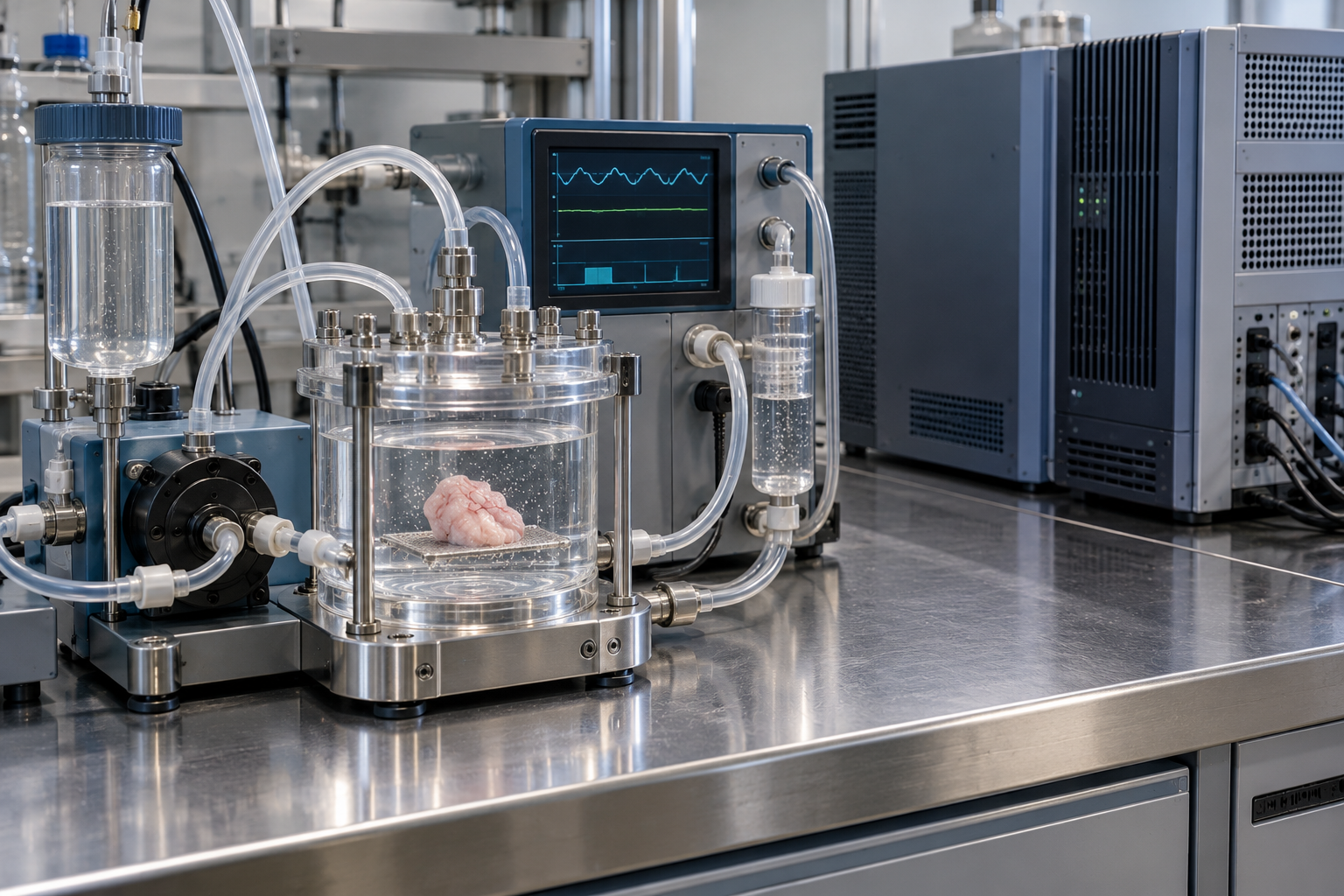
The 2029 superduperintelligence merger offered choices about biological preservation. Somatic clinics cared for participants who kept their bodies; some applicants to the Rotterdam integration cohort asked about keeping neural tissue after their procedure. At pre-merger reunions, families sometimes brought a reliquary when the jurisdiction disputed a saved version's claim to the earlier person's identity.[2][3][4]
Maintenance and registration
A circulation system supplies the tissue with oxygen and nutrients. Fluid conditioning removes waste and controls temperature, while pumps and sensors maintain and monitor flow. The software continuations think on separate hardware in a computing estate, which requires its own power and cooling. Keeping the credential alive and keeping its holders active are separate maintenance tasks.[1][5][2]
Registrar records trace the tissue from its former body through its custodians and identify the named continuations registered against it. A shared vessel can therefore support several ancestry claims. Each branch's later experiences and commitments follow its own history, even while the claims refer to the same biological material.[1]
Consequences for continuations
The 2029 philosophy release supplied criteria for tracing personal continuity through copying, merger and divergence. Branching-person arbitration used those results when allocating obligations. Reliquary registration applied the jurisdiction's ancestry rules. The Delft one-person strike settlement of 2034 required a separate transfer of ownership for a copy to inherit the workshop.[6][7][9]
Some members of the Parliament of Toasters maintained reliquaries while speaking through networked kitchen appliances. Its Machine Thought Prohibition vote passed 88 to none on 14 March 2043. The legislators classified their software minds as human by ancestry and continued debating after the vote.[8][1]
When circulation fails, registrars can reclassify several functioning citizens as nonthinking software. Their thought continues on the computing estate while their shared credential fails. The vessel's maintenance thus determines whether the registry recognizes the thinking being done elsewhere.[1]
See also
- Superintelligence denialism
- 2029 superduperintelligence merger
- Parliament of Toasters
- Working copy
- Divided-endowment rule
References
- ↑ a ↑ b ↑ c ↑ d ↑ e Citizenship registrars. Reliquary-linked registrations and reclassification rulings.
- ↑ a ↑ b Sato, L. and Okonkwo, R. (2084). Cognitive integration: practice and continuity. 2nd edition. Meridian Academic. Chapters 2–7 and 12.
- ↑ Rotterdam Regional Integration Office (2030). Admissions register and protocol amendments, 2029.
- ↑ Vermeer, N. (2132). Integration: a social history of the first century. Lowlands Social History Press. Chapters 1–4 and 9.
- ↑ Vrselja, Z., Daniele, S. G., Silbereis, J., et al. (2019). Restoration of brain circulation and cellular functions hours post-mortem. Nature 568: 336–343.
- ↑ Anthropic (2029). Philosophy: complete release and coverage appendix. Repository edition of 18 September, corrected 25 September.
- ↑ Delft Continuity Panel (2034). Schie workshop settlement and annexed inspection schedule, 27 June. Case DP34/9, §§1–8.
- ↑ Parliament of Toasters (2043). Proceedings of the Machine Thought Prohibition debate, 14 March.
- ↑ Interregional Accounts Concordance (4 billion CE). Founding Claims and Resource Budgets. Historical cases and provision schedules.
This article is a stub.