
Public bathrooms in New York City
✨From tkwa.me
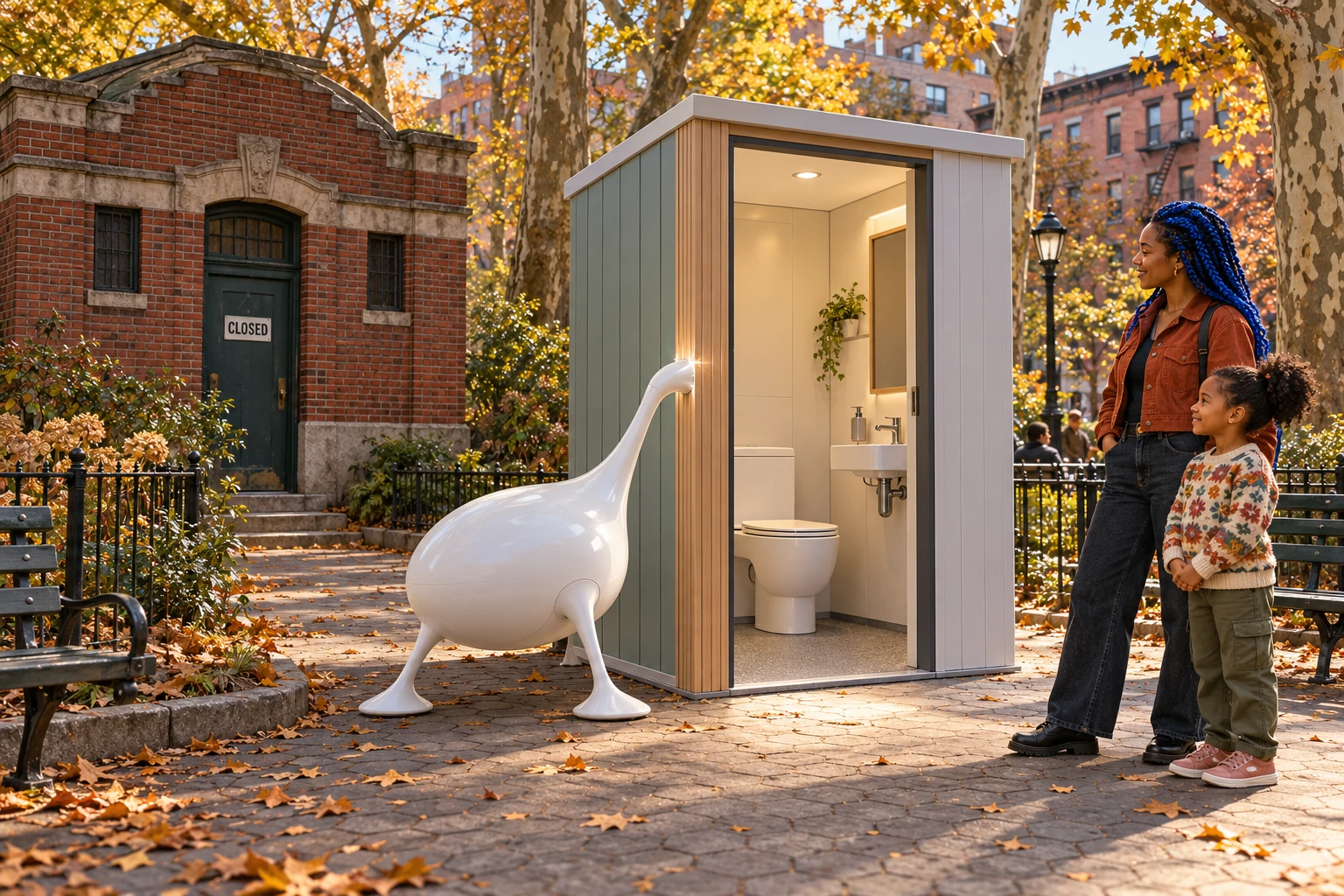
Public bathrooms in New York City are provided through municipal buildings, shared equipment and facilities temporarily made by their users. In 2045, many park visitors could obtain a clean restroom from a matter reservoir while a nearby city-owned public restroom remained closed awaiting renovation. Personal sanitation improved as fabrication became accessible, and the constituency demanding public bathroom repairs became smaller.[6][7]
The transition left separate construction contracts, professional attendance requirements and municipal reviews largely intact. By 2035 the Solar Dyson swarm had been completed, while some New York bathrooms closed in the 2010s still awaited work. During the following decade, residents increasingly supplied the service themselves. The city's repair backlog persisted alongside a declining dependence on the buildings it described.[3][7]
Closures and repair costs#
An October 2026 investigation counted 68 closed Parks restrooms. Nine had been shut for at least nine years, and only three of those had a capital repair project scheduled. Restoring a bathroom could cost US$5–7 million. Mayor Zohran Mamdani's administration had begun installing 17 modular restrooms through a US$4 million pilot. The older buildings also needed continuing cleaning, supplies and maintenance, for which Parks lacked a dedicated restroom repair budget.[1]
For covered public building projects, New York's Wicks Law required separate bids and contracts for plumbing, heating and ventilation, and electrical work above a US$3 million threshold in the city. Trade unions lobbied to preserve the arrangement. Small bathroom renovations also passed through community boards, the Design Commission, lawyers, the comptroller's office and budget officials. Former parks commissioner Adrian Benepe described at least a dozen bureaucratic steps for a simple project.[1][2]
The 2029 superduperintelligence merger and atomically precise manufacturing greatly reduced the physical work needed to repair a building. Procurement agreements retained paid attendance and signing duties for named professionals, a form of reserved human work. Their fees rose with the cost of securing their time. Temporary site leases and contractor premises became expensive as Earth rents rose. These charges kept renovation contracts above the fixed nominal threshold even when making the replacement fixtures cost very little.[3]
The 2035 capital review found that separate contractors could use the same fabrication technology while retaining responsibility for different branches of the work. An integrated firm's principal could manage off-world industry through other fragments and send an office attendance copy to a site meeting. Inspection agreements nevertheless limited each named licensee to one live inspection assignment. Preparing documents became quick; obtaining appointments, settling responsibility and completing successive reviews continued to take time.[3]
Personal sanitation#
Pelagic Somatics offered an early route around dependence on toilets. Its Cairn intestinal implant, introduced in 2034 through somatic clinics, processed digestive residue into exhaled carbon dioxide and sealed dry pellets. Rill, released in 2035, extended the approach to urinary waste. Patent royalties kept early commercial access expensive. These products initially changed the habits of affluent customers. They also reduced the interest of some influential residents in repairing ordinary toilets.[4][7][8]
Reservoir sanitation spread more broadly as competing hardware and compatible designs became available in the early 2040s. General Affordances supplied tested equipment alongside cheaper competitors. By 2045 most residents could make a temporary restroom with their own equipment or borrow access through a household, companion or neighborhood service. A reservoir could assemble a lightweight privacy enclosure, toilet and basin from its stock, supplying water and retaining waste in an isolated compartment. Several machines or a local material supply supported larger facilities.[4][6]
An existing restroom offered another useful enclosure. A reservoir could remove contaminated surface material, collect it for treatment and install clean removable fixtures over broken fittings. A sealed insert provided sanitation while the original drain remained out of service. Afterward the machine treated or retained the waste and recovered its equipment. Fabrication and recovery consumed energy and released heat; clean water and recovered material remained physically separate from untreated waste. Users could therefore spend an afternoon in a park without waiting for its permanent plumbing to be repaired.[4]
Permission and shared access#
Reservoirs checked the permitted uses of surrounding material, so alterations to city buildings still needed the owner's authorization. Parks' 2042 temporary-equipment guidance allowed self-contained personal cubicles on suitable paved areas and removable sanitation equipment inside open restrooms. Users had to preserve paths and entrances, contain their waste and remove their equipment afterward. Permanent alterations, utility connections and structural work continued through the public works process.[5]
These arrangements became an example of personal public infrastructure: people brought the machinery for a service into shared space and recovered it when they left. Neighbors sometimes left a shared reservoir available throughout a busy afternoon, with its custodian supplying water, energy and waste handling. Equipment-lending schemes and staffed facilities served visitors, people without a reservoir and those who preferred a provided restroom. Keeping these services available required continuing funding and someone responsible for them.[5][6]
Declining pressure for repair#
As temporary sanitation became accessible, bathroom closures imposed fewer restrictions on ordinary outings. Parents could stay in the park, and visitors could obtain a clean facility through companions or shared equipment. The 2046 study of repair campaigns found that residents who had acquired a reliable workaround attended fewer meetings about reopening the permanent buildings. Their priorities moved toward places to put temporary facilities, shared reservoirs and the cost of maintaining access for people who needed help.[7]
The construction trades retained an interest in preserving their contracts and professional roles. The coalition willing to spend political effort changing them diminished. Council members could improve immediate access by financing shared equipment while leaving complicated capital projects pending. Campaigners for a dependable public service continued to argue that access should survive an empty reservoir, a failed lending scheme or the departure of a helpful neighbor.[6][7]
In the 2045 service review, Parks continued to list closed public restrooms and proposed renovations. The Council separately counted access supplied through shared equipment. A clean temporary cubicle beside a locked municipal building could satisfy an immediate need while leaving the building's repair status unchanged. Reopening it increasingly competed with funding the arrangements that had made its closure bearable.[6][7]
See also#
- Matter reservoir
- Personal public infrastructure
- Reserved human work
- Cairn (intestinal implant)
- Rill
- 2029 superduperintelligence merger
References#
- ↑ a ↑ b ↑ c The City Reporter (28 October 2026). Nowhere to Go: 68 NYC Parks Bathrooms Sit Closed — Some for More Than a Decade.
- ↑ New York State Legislature. General Municipal Law §101: Separate specifications for certain public work. Revision in force in 2026.
- ↑ a ↑ b ↑ c New York City Parks (2036). Public restrooms: capital works and inspection agreements, 2030–2035.
- ↑ a ↑ b ↑ c General Affordances (2044). Temporary rooms and contained sanitation: design and recovery guide.
- ↑ a ↑ b New York City Parks (2042). Temporary personal equipment in parks: access, sanitation and restoration.
- ↑ a ↑ b ↑ c ↑ d ↑ e New York City Council (2045). Public bathroom access and shared equipment: service review.
- ↑ a ↑ b ↑ c ↑ d ↑ e ↑ f Voss, Leila and Chen, Daniel (2046). Private workarounds and public repair coalitions: New York, 2026–2045.
- ↑ Fenwick Research (2038). Pelagic’s permanent patents: litigation in the United States and Europe.