
Ceremonial mace
✨From tkwa.me
A ceremonial mace is an object used to mark the authority, gathering or continuity of an institution. A bearer may carry it into a chamber or procession, place it beside a chair, or assemble it from parts held by different participants. Its appearance tells observers which institution has gathered and, in some traditions, what kind of business it is conducting.[1][3]
Maces developed on Earth as emblems of office and became associated with legislatures, universities and other bodies. Their descendants range from decorated staffs to hinged batons, planted gardens and sets of objects held at widely separated sites. Each institution gives its mace meaning through its own rules and ceremonies.[1][3]
Early history on Earth#
Main article: Ceremonial Maces on Earth[1]
In England the mace carried by a serjeant at arms became an emblem of office and, over time, of the House of Commons. The serjeant carries it in the Speaker's procession, and its position in the chamber distinguishes a sitting of the House from a committee of the whole House. Civic bodies, universities and other institutions developed their own practices.[1][2]
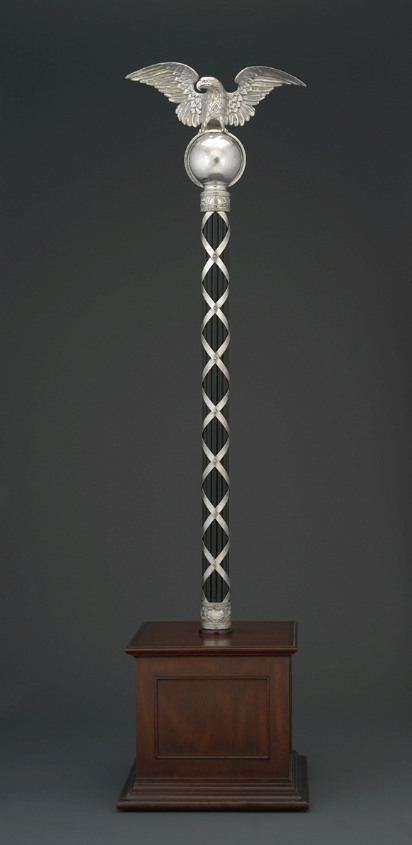
Designs changed with the institutions using them. The United States House of Representatives' mace, in use from 1842, groups ebony rods beneath a globe and eagle.[1][13]
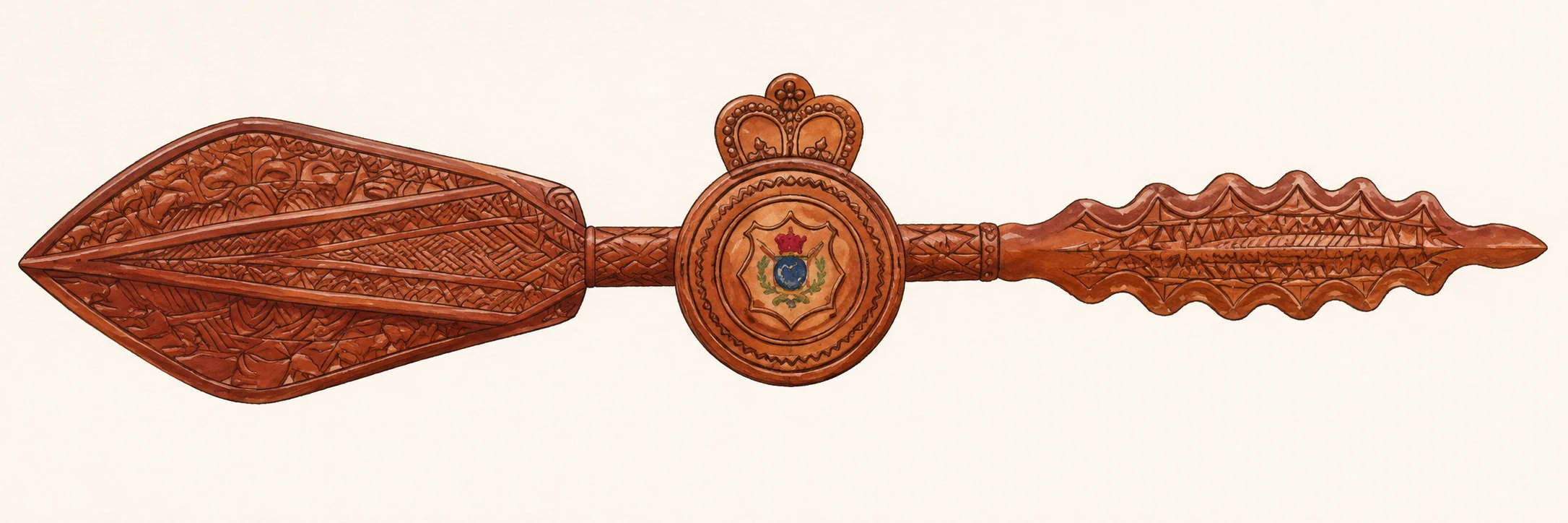
The Cook Islands Parliament adopted Te Taiki Mana in 2023, combining a carved paddle and spear with the parliamentary emblem. These examples carried local histories and political symbols in forms recognizable to their communities.[1][14]
From Earth to the solar system#
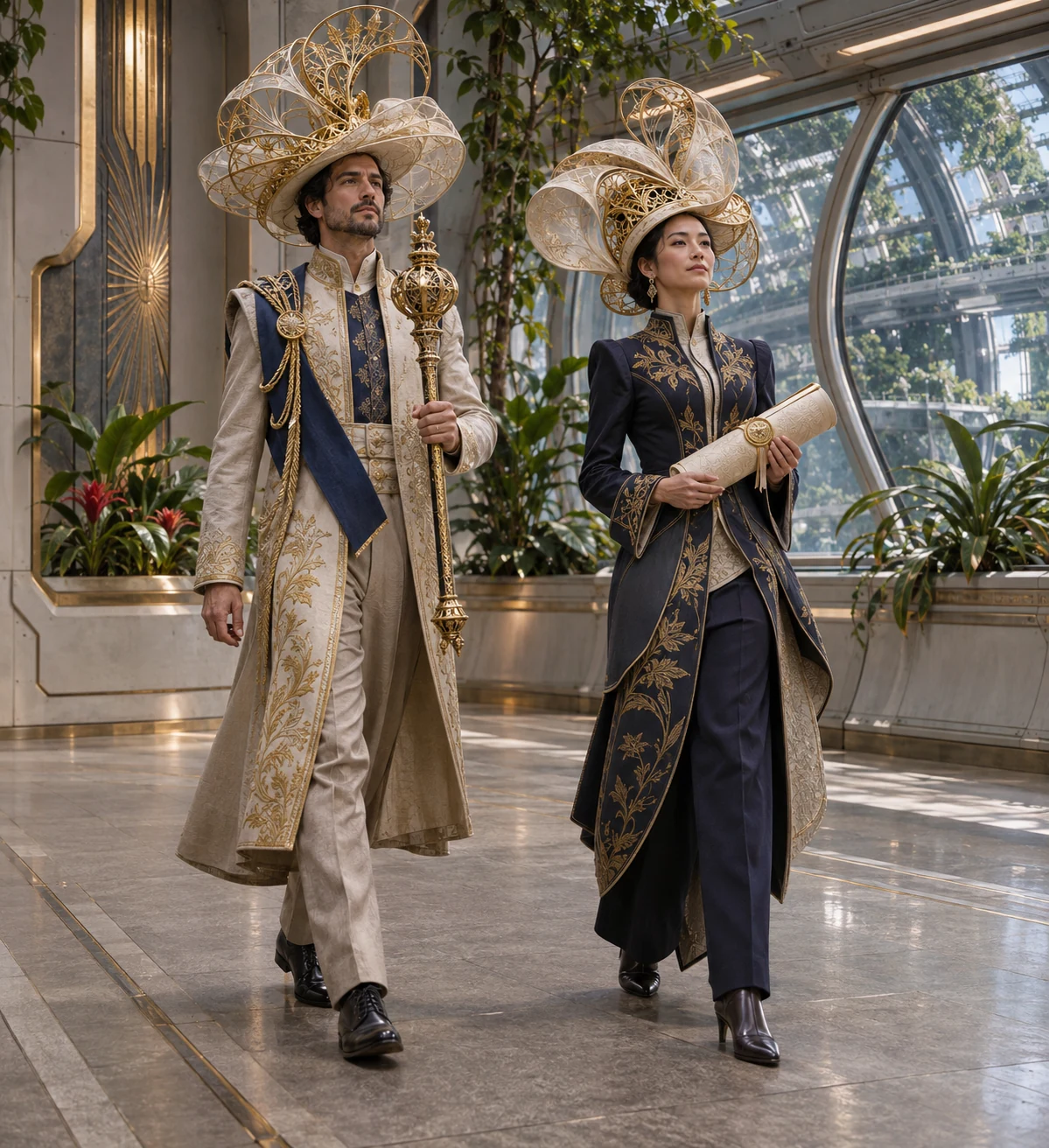
As new settlements wrote charters, their ceremonies often borrowed the sequence of a mace entering ahead of an officer and being placed where the assembly could see it. In habitat charter processions, residents carried a newly adopted charter and an emblem through the inhabited parts of a station before the first sitting. A procession could move along a corridor or, in a free-fall chamber, follow handrails around the room.[3]
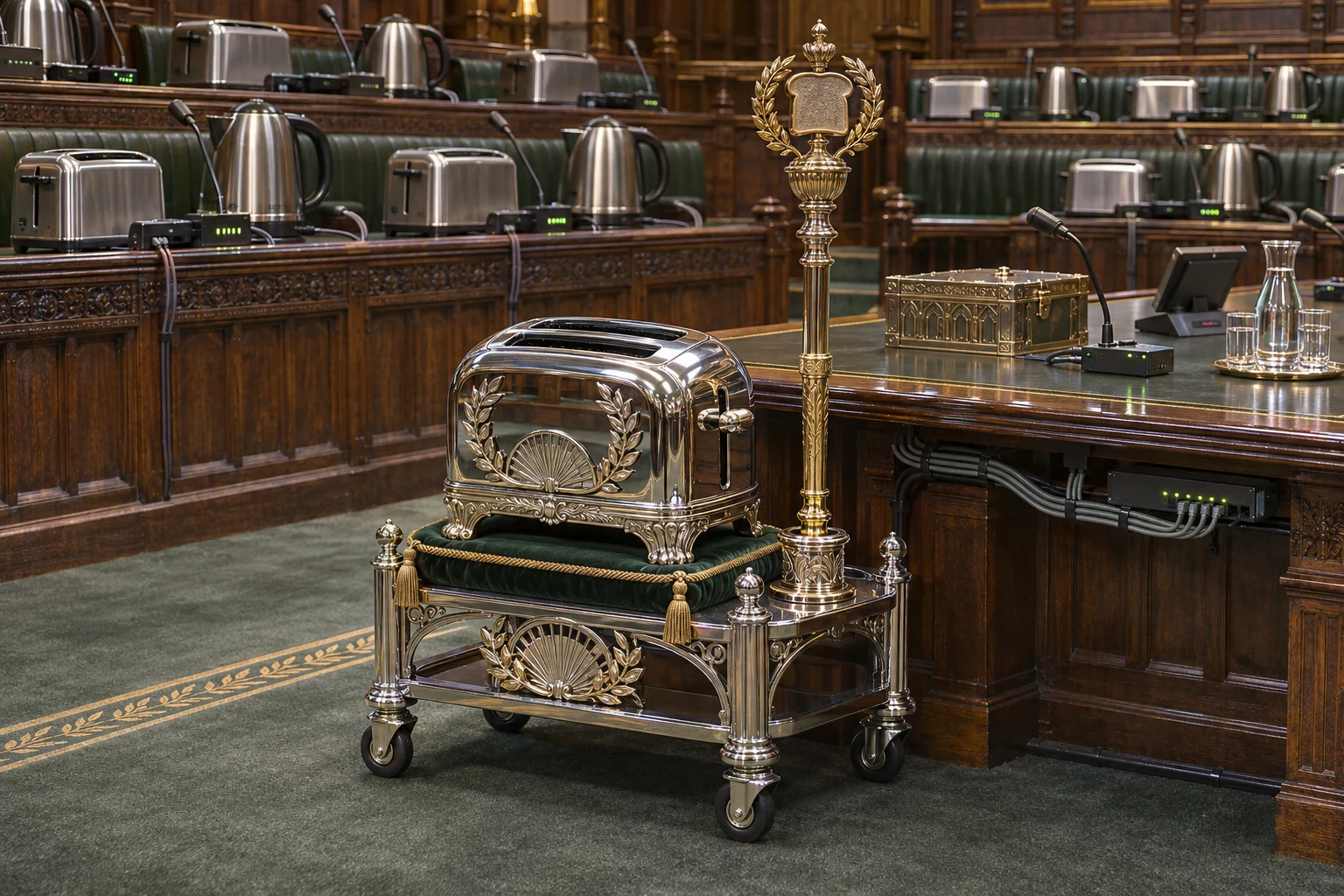
The Parliament of Toasters, whose uploaded legislators speak through kitchen appliances, adopted its mace in 2042. A polished toaster body mounted on a wheeled stand contains a removable brass staff. At the opening of a sitting the serjeant rolls it to the table and raises the staff. The staff is stored separately from the heating elements, and the chamber's cooling system continues to serve the members' externally hosted minds. The mace was present for the 2043 Machine Thought Prohibition vote.[5]
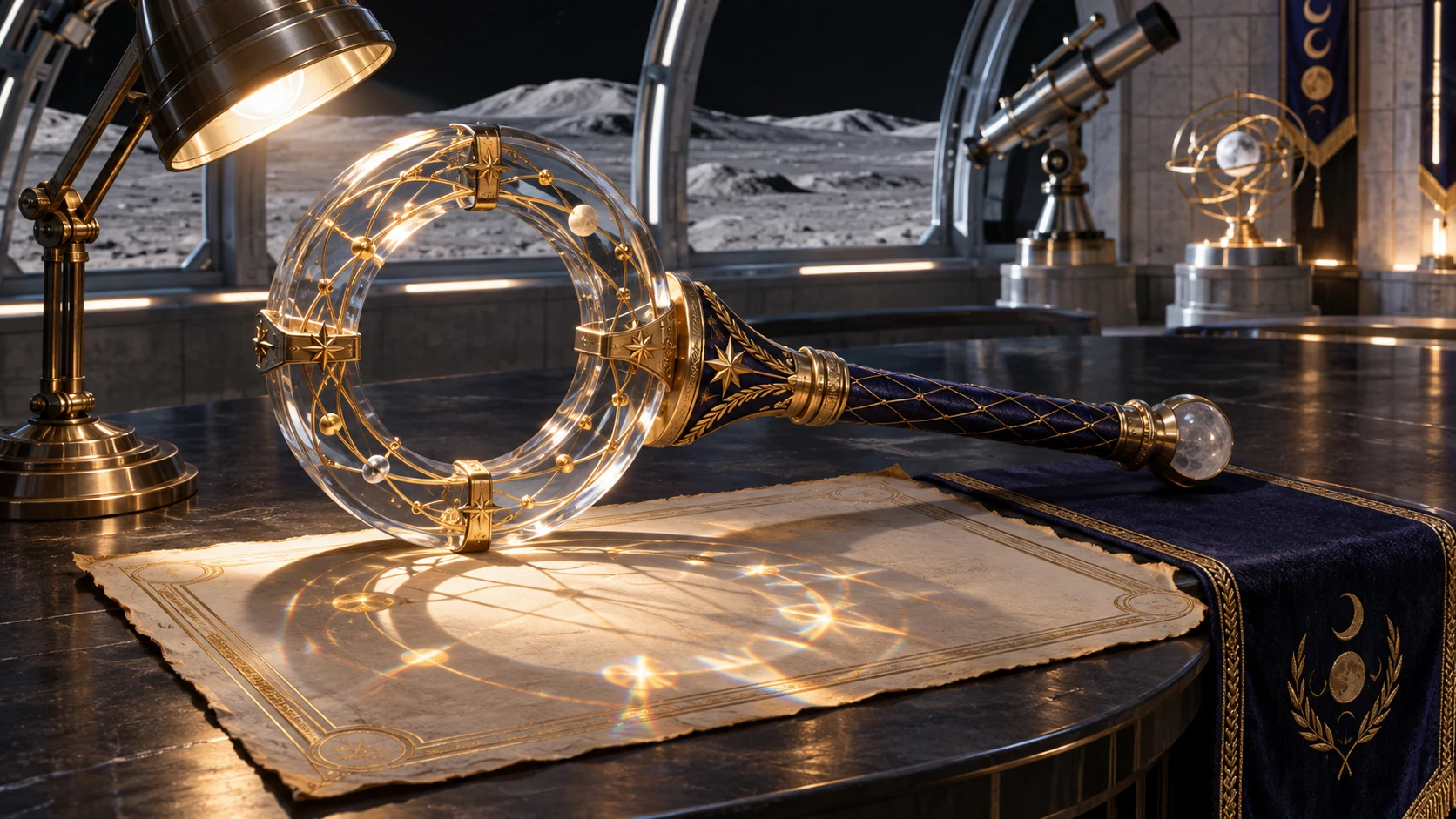
Lunar Night University adopted a glass ring mace for its 2118 convocation. Gold filaments sealed in the ring trace the paths of the Moon and Earth as seen from the university's observatory. A bearer carries its short handle; on the table, a lamp shines through the ring onto the charter. The ring is brought out for the admission of students and the award of degrees, then returned to the university collection.[4]
Assemblies and changing forms#
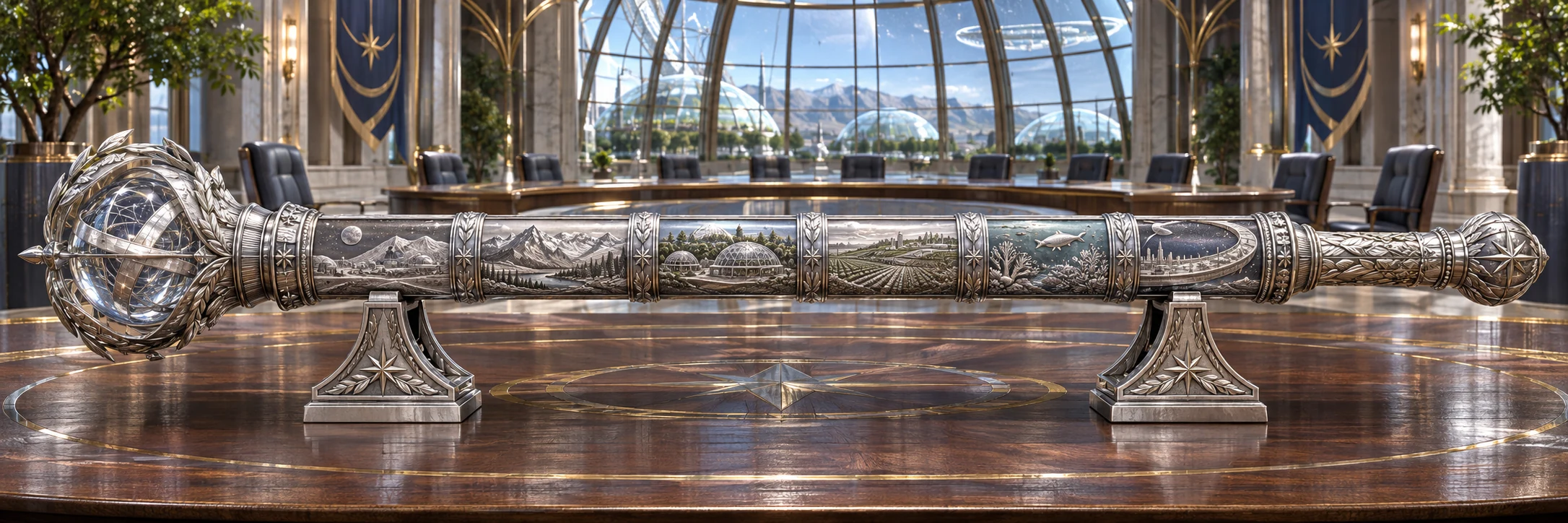
The Mace of the Many Houses is assembled at the opening of an inter-habitat assembly. Each member community sends a bearer with a silver section engraved with scenes from its home. The bearers fit the sections around a central staff, then place the completed mace on a pair of carved supports. The sections are returned to their communities after the session, and craftspeople add a new scene before the next gathering.[6]
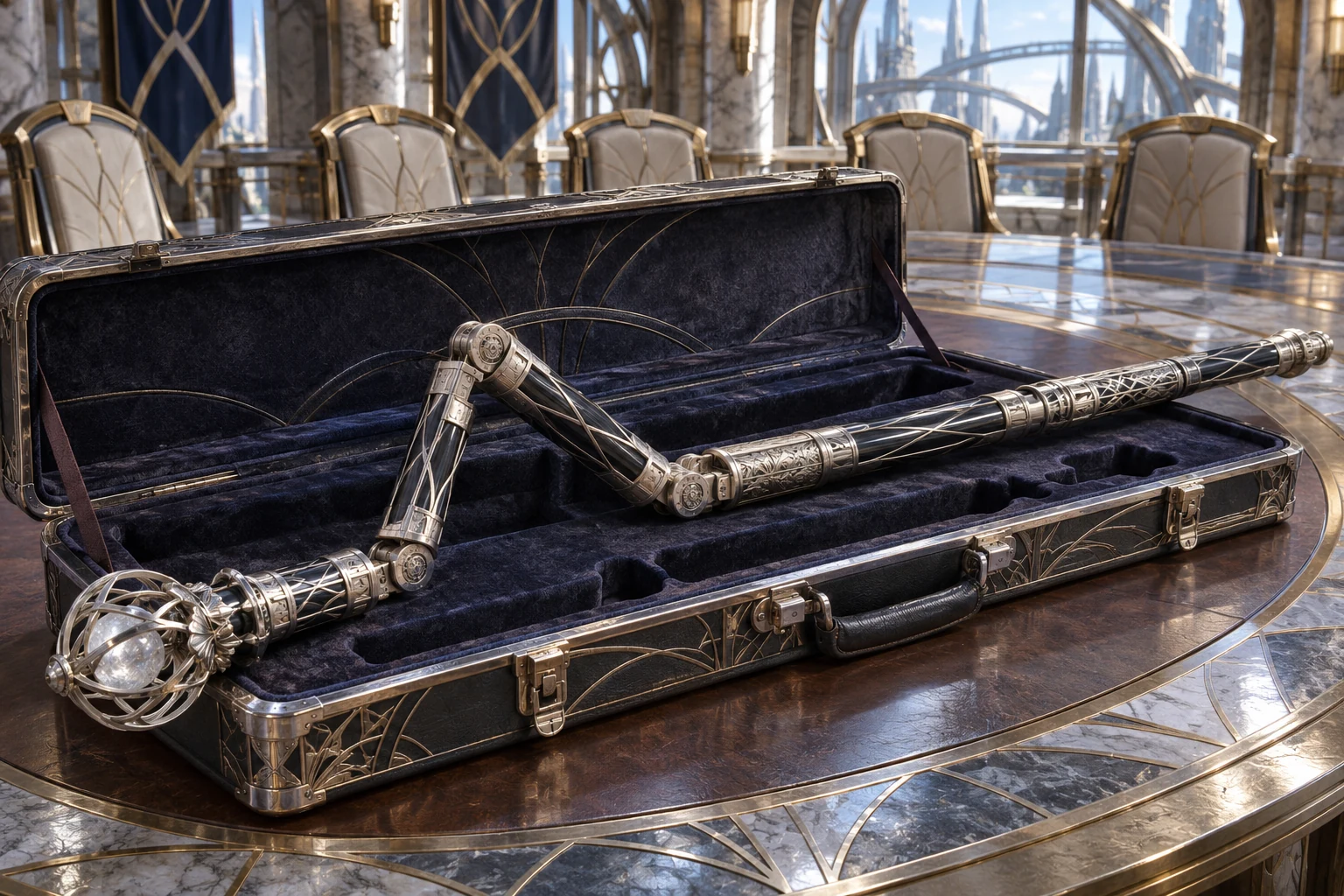
The Council of Shared Orbits, which coordinates traffic and common facilities among habitat operators, uses a hinged silver-and-ceramic baton. Its sections fold into a compact case for travel between meeting places. The bearer opens it at the table, where the joints mark the participating habitats; a new section can be fitted when another habitat joins the council.[7]

In charter gardens, a community grows its ceremonial emblem as a living collection. A council may plant a tree for each original signatory and place a carved stone beside each later accession. Gardeners replace aging plants from cuttings and record the succession, so the assembly can retain a continuous garden while its living material changes. At a renewal ceremony members walk the garden before meeting indoors.[8]
Distance and shared authority#
A distributed mace is a set of related objects kept at different meeting sites. Each local gathering can display its own piece and record its proceedings. The institution's charter determines what that gathering can decide; messages carry records and decisions between sites at the speed available to their communications systems. The pieces can also be brought together for a rare physical meeting, when travel and the participants' plans permit.[3][11]
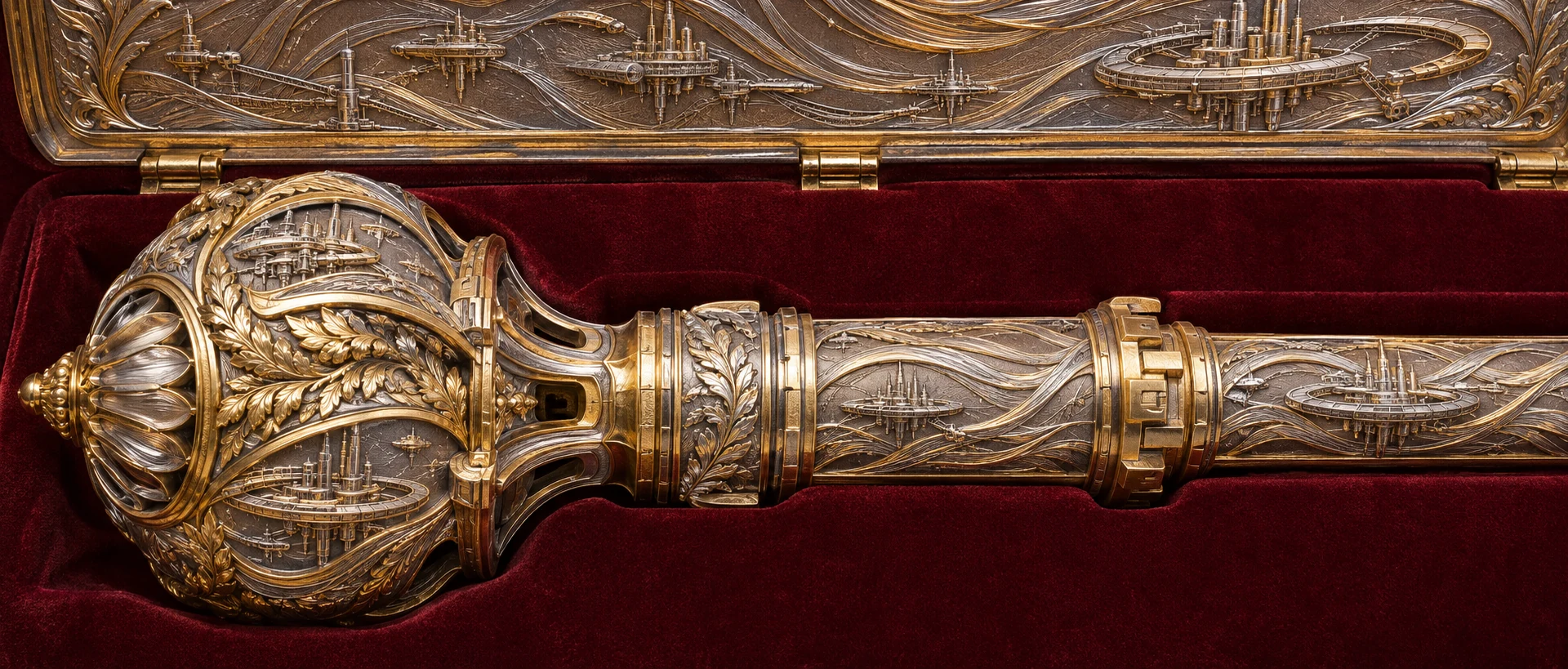
The Carina charter convention met at the inner depots of Eta Carinae in 10480. Its 23 delegations voted under mandates they already held; the convention sent its minutes toward Earth on the day the result was declared. The Carina recovery mace, commissioned after the convention, consists of 17 interlocking sections for the delegations that adopted the charter. Custodians can detach the sections for transport and assemble them at a later meeting of the Authority. The fitted case is worked with fine reliefs of the depots and the surrounding stellar winds. Four dark bands record the opposing votes, and two pale bands record the abstentions.[9][10]
The Carina mace marks the charter and the assembly that adopted it. The convention's votes belonged to its delegations, and later accessions were recorded in a register. A replica carried elsewhere can commemorate the agreement while its holders act under whatever authority their own mandates provide.[9][10]
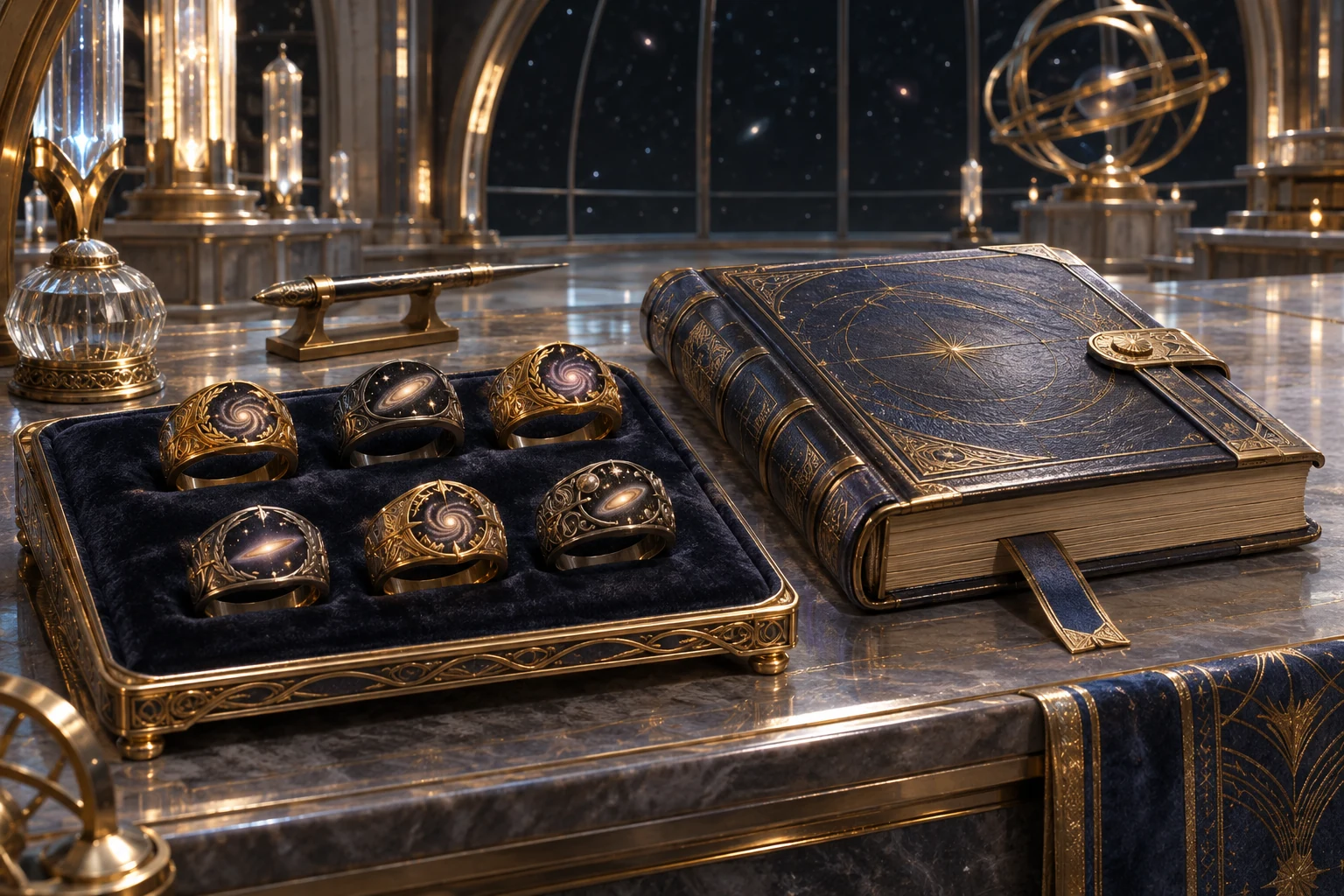
For the 60-million-CE edition of the Local Group Accounts Convention, participating registries made a set of gold and dark-metal rings engraved with the boundaries of their local accounts and set with tiny depictions of their home galaxies. Each registry kept its own ring beside its copy of the reconciled returns. A receiving registry could add another ring to its display after the relevant records arrived, so the arrangement grew over the many years needed for reports to cross intergalactic distances.[12]
Custody and ceremony#
Rules for a mace commonly identify a custodian, occasions for display and the person who may carry or assemble it. Some chambers distinguish a sitting, a committee and an adjournment by placing the object on different supports. Others use a light, a movement or a change in arrangement to signal the same transitions. A damaged or absent mace may be replaced temporarily according to local rules.[11]
Makers preserve materials that matter to the institution and adapt the form to the people using it. A handheld staff suits a walking procession; a ring can frame a document or cast a pattern of light; separate pieces can express an association whose members seldom meet in one place. Museums preserve retired objects and the instructions for carrying them alongside the records of the bodies they served.[3][11]
See also#
- Parliament of Toasters
- Carina charter convention
- Eta Carinae intervention
- Space habitat
- Earth
- Local Group Accounts Convention
References#
- ↑ a ↑ b ↑ c ↑ d ↑ e ↑ f Ceremonial mace. Wikipedia.
- ↑ House of Commons Library (2015). Serjeant for the Commons, commemorative edition.
- ↑ a ↑ b ↑ c ↑ d ↑ e Habitat Charter Archive (2160). Processions and emblems of the early settlements.
- ↑ Lunar Night University (2118). Convocation programme and mace catalogue.
- ↑ Parliament of Toasters (2043). Proceedings of the Machine Thought Prohibition debate, 14 March; ceremonial register.
- ↑ Assembly of the Many Houses (2381). Ceremonial register and catalogue of engraved sections.
- ↑ Council of Shared Orbits (2436). Charter and ceremonial register.
- ↑ Charter Gardeners’ Association (2570). Gardens of accession and renewal.
- ↑ a ↑ b Carina Recovery Authority (10480). Charter convention minutes and accession register.
- ↑ a ↑ b Carina Recovery Authority (10483). Mace commission and custody record.
- ↑ a ↑ b ↑ c Institute of Ceremonial Custody (2604). Custodianship and replacement of institutional emblems.
- ↑ Local Group Accounts Convention (60000000). Reconciled accounts for the 50-million-year epoch and ceremonial register.
- ↑ History, Art & Archives, U.S. House of Representatives. Mace of the U.S. House of Representatives.
- ↑ Parliament of the Cook Islands (2025). The Parliament Mace – Te Taiki Mana.