
Founder-personality covenant
✨From tkwa.me
A founder-personality covenant is a succession or cognitive-transformation contract requiring selected dispositions to persist. The founder specifies ambitions, tastes or emotional commitments that successors must retain. The terms let a person become more capable while continuing to want things the founder valued.[1][5][6]
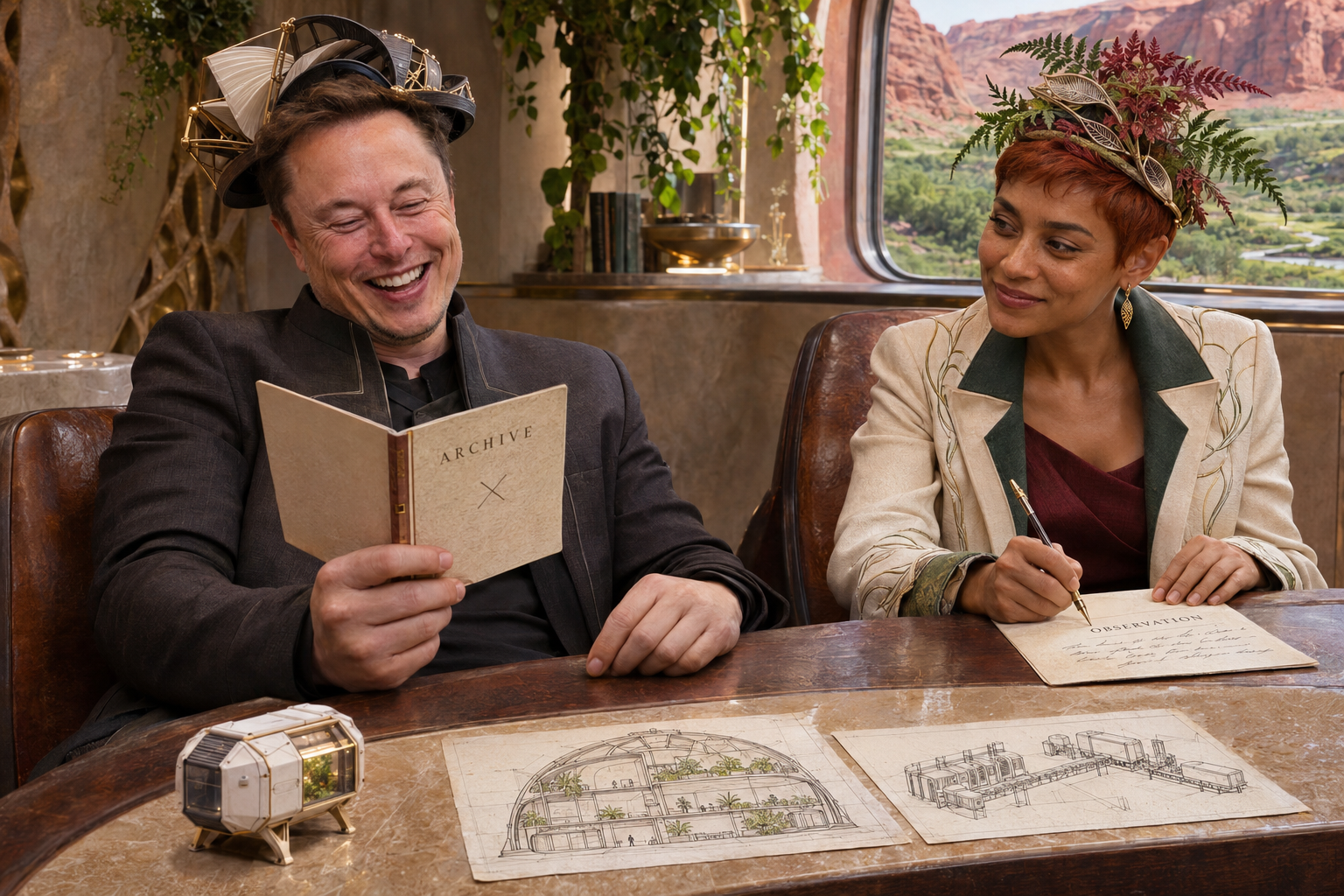
Succession and cognitive change
The succession terms determine who qualifies to inherit. A successor can learn, improve their reasoning and adopt better methods while retaining a specified desire. The covenant selects what must continue through those changes. Founders can also bind later versions of themselves, making the arrangement part of a continuing person's transformation.[1][6]
On Mars, Elon Musk's covenants retain his appetite for juvenile jokes, rebranding and personal credit. Engineers can improve his reasoning while contractual auditors check that he still wants to rename things X. To inherit, a successor must still find the jokes in the court's test archive funny.[1]
Property and authority follow the governing settlement. The divided-endowment rule apportions an existing estate among branches, while a resident branch makes decisions where distant communication requires local control. Constitutional meme reserves impose duties on inherited property. The 4/20 reserve gives display maintenance priority over industrial conversion; converting its marijuana slash requires the proprietor's consent.[1][2][3]
Ambitions and grievances
The dispositions retained by Musk's covenants also include curiosity, enthusiasm for manufacturing and the ambition to spread inhabited civilization. His companies mass-produced habitats and standardized the Martian convoy's replacement machinery, reducing its spare-parts burden. Founding settlement programmes supplied homes and biological archives while retaining his approval rights over local public-service companies.[1][4]
Branches with shared dispositions can pursue competing interests. The Musk branches embodied in Phobos and Deimos developed hostile-takeover moons. Phobos threatened to withdraw navigation coverage from Mars; Deimos offered to replace it in exchange for the planet. The governing Musk bought blocking stakes in both.[1]
Grievance trusts preserve founding emotional commitments through increasingly intelligent beneficiaries. Acknowledging an opponent's position can invalidate a provision guarantee, while trustees and suppliers receive income as the dispute continues. In the toilet-roll succession war, inherited views on paper orientation qualify descendants to inherit municipal plumbing franchises. Leading trusts inhabit articulate porcelain toilets. Their successors retain both a position on the roll and property whose income depends on it.[5][6]
See also
References
- ↑ a ↑ b ↑ c ↑ d ↑ e ↑ f Martian Succession Registry (119,420,070 CE). Founder covenants, beneficial holdings and the Phobos–Deimos blocking-stake settlement.
- ↑ Interregional Accounts Concordance (4 billion CE). Founding Claims and Resource Budgets.
- ↑ Galactic Display Conservancy (119,420,069 CE). Berth commissioning record and retarded-time illumination schedule.
- ↑ Martian Works Archive (123 million CE). Habitat production, convoy standardization and founding settlement contracts.
- ↑ a ↑ b Local Remnant Grievance Register (50.1 billion CE). Selected continuing cases, 50-billion-CE return.
- ↑ a ↑ b ↑ c Local Remnant Grievance Register (50.1 billion CE). Trust schedules and maintenance audit annex.
This article is a stub.